 Engine Management Technology
ECONOMICAL RIDING INDICATOR
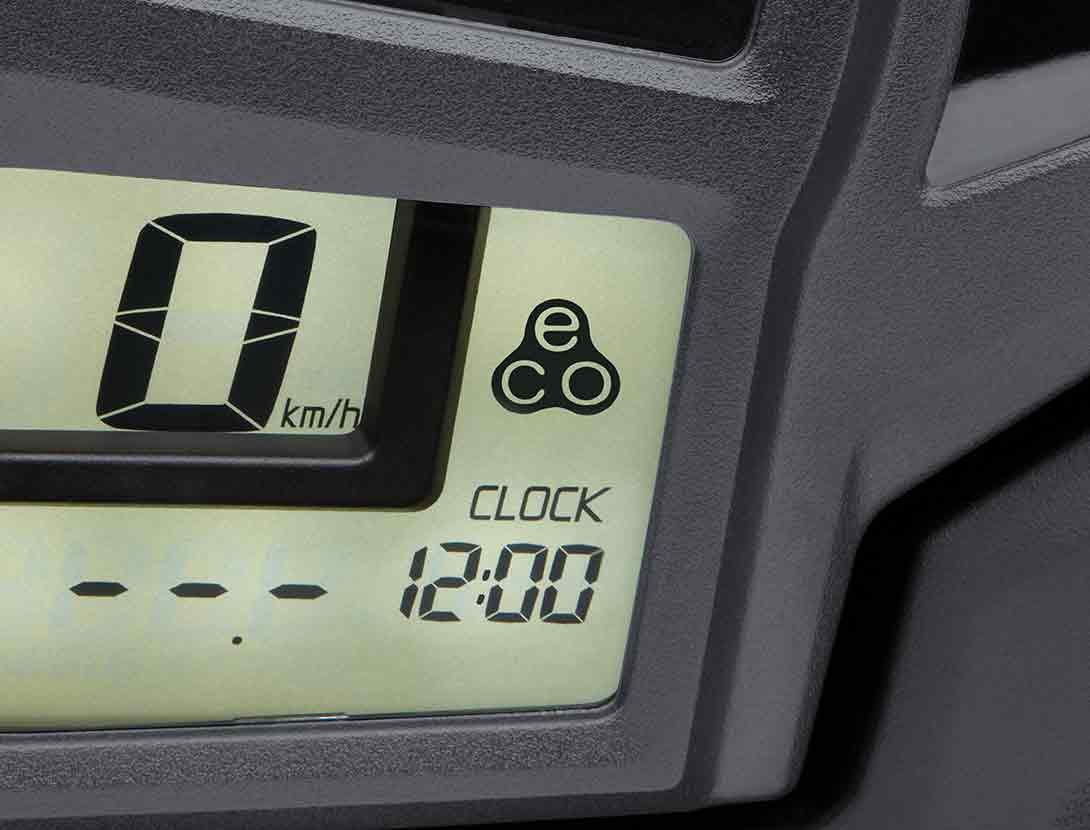
Using high-precision electronic control for engine management, Kawasaki models can achieve a high level of fuel efficiency. However, fuel consumption is greatly affected by throttle use, gear selection, and other elements under the rider's control. The Economical Riding Indicator is a function that indicates when current riding conditions are consuming a low amount of fuel. The system continuously monitors fuel consumption, regardless of vehicle speed, engine speed, throttle position and other riding conditions. When fuel consumption is low for a given speed (i.e. fuel efficiency is high), an "ECO" mark appears on the instrument panel's LCD screen. By riding so that the "ECO" mark remains on, fuel consumption can be reduced.
While effective vehicle speed and engine speed may vary by model, paying attention to conditions that cause the "ECO" mark to appear can help riders improve their fuel efficiency – a handy way to increase cruising range. Further, keeping fuel consumption low also helps minimize negative impact on the environment. |
 POWER MODES
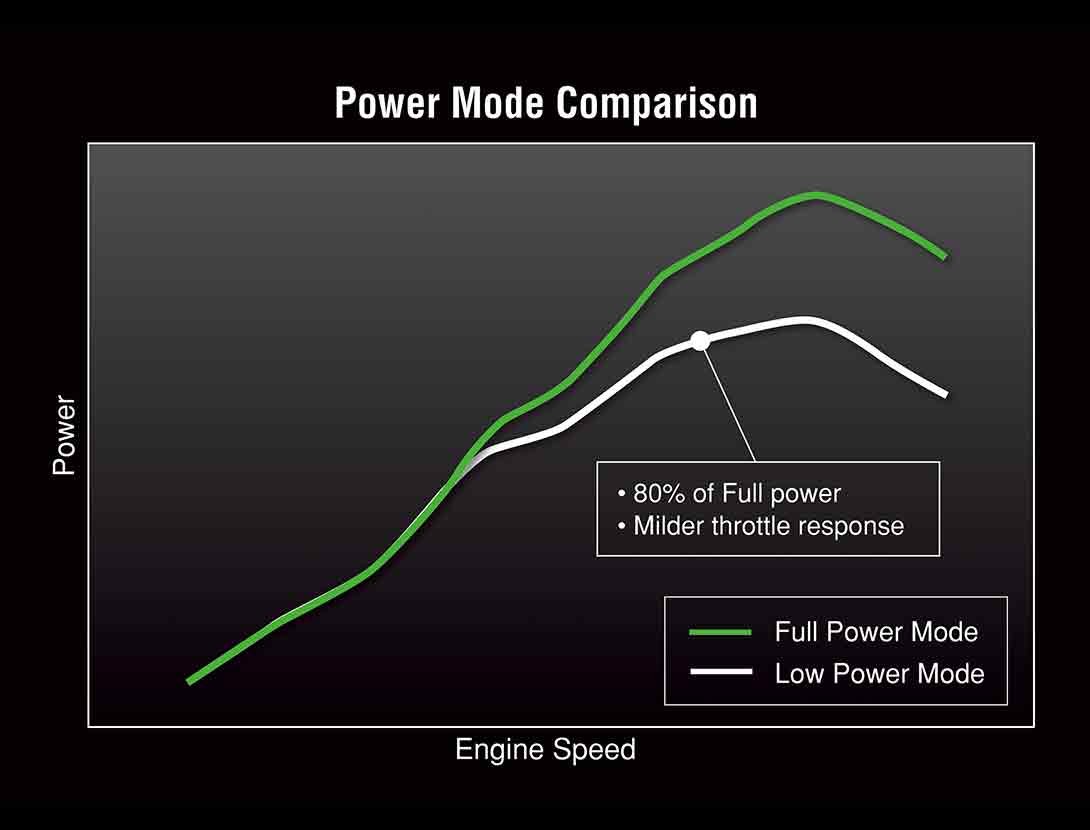
Models equipped with multiple Power Modes offer riders an easily selectable choice of engine power delivery to suit riding conditions or preference. In addition to Full Power mode, one (Low) or two (Middle, Low) alternate mode(s) in which maximum power is limited and throttle response is milder are provided. |
 ELECTRONIC THROTTLE VALVES
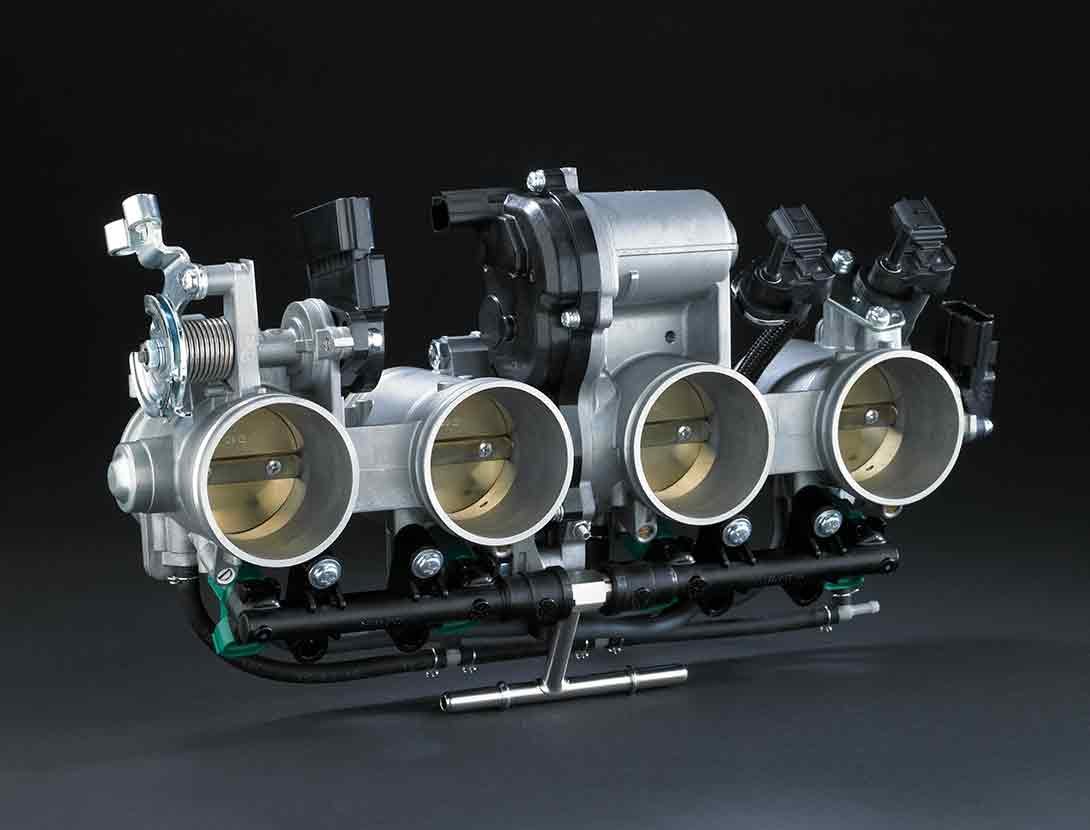
Kawasaki’s fully electronic throttle actuation system enables the ECU to control the volume of both the fuel (via fuel injectors) and the air (via throttle valves) delivered to the engine. Ideal fuel injection and throttle valve position results in smooth, natural engine response and the ideal engine output. The system also makes a significant contribution to reduced emissions.
Electronic throttle valves also enable more precise control of electronic engine management systems like S-KTRC and KTRC, and allow the implementation of electronic systems like KLCM, Kawasaki Engine Brake Control, dual-direction KQS, and Electronic Cruise Control. |
 Smartphone Connectivity
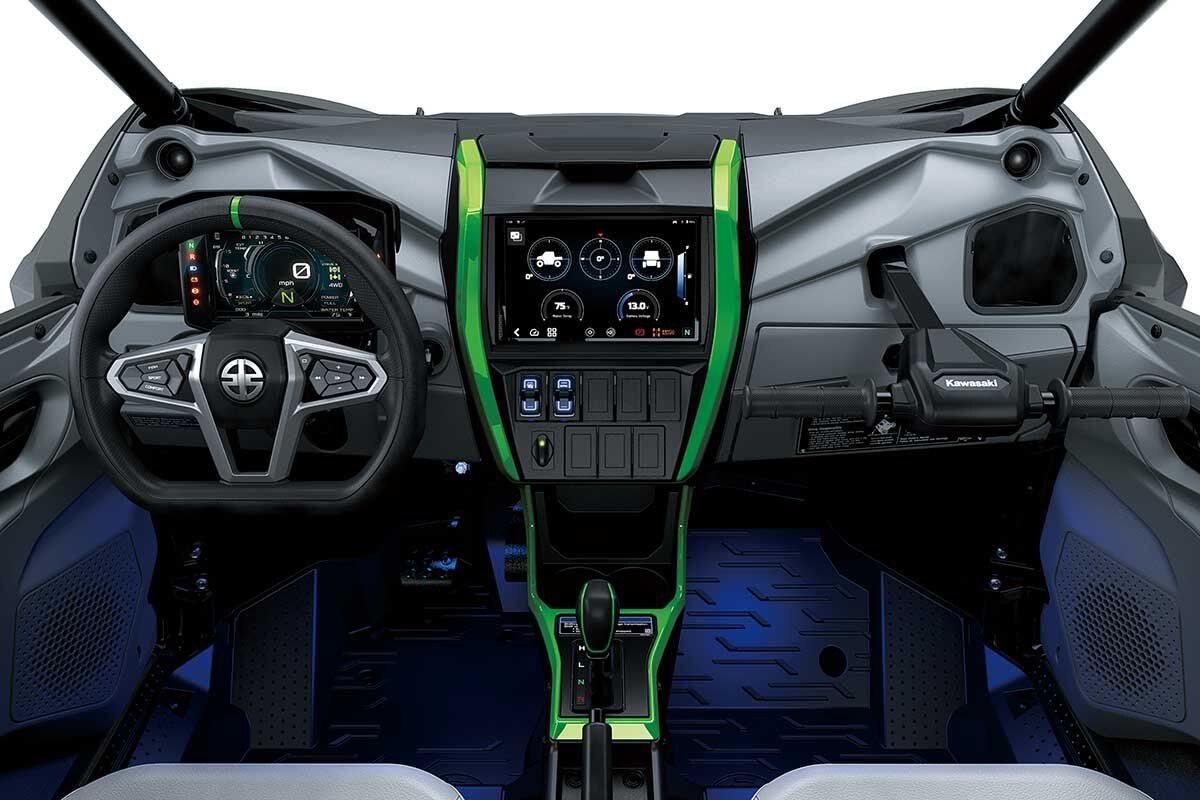
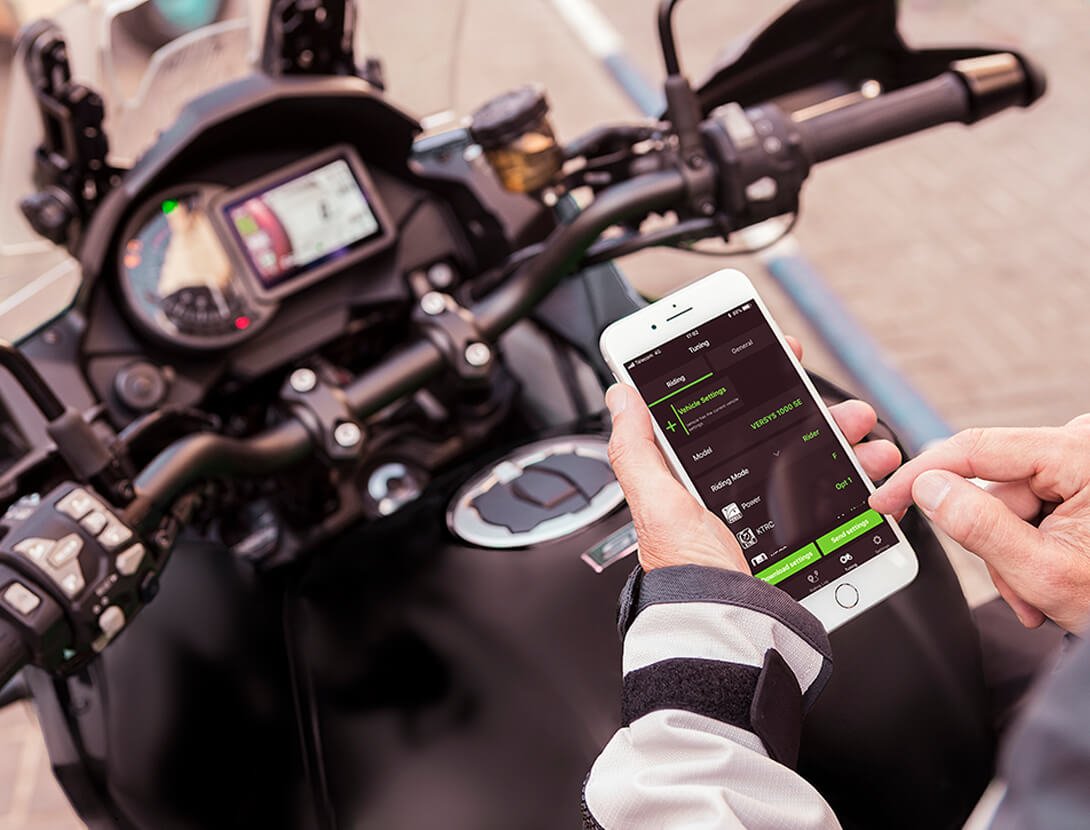
Originally offered on Kawasaki’s on-road motorcycles, clever technology enables riders to connect to their motorcycle wirelessly. Using the smartphone application “RIDEOLOGY THE APP MOTORCYCLE,” a number of instrument functions can be accessed, contributing to an enhanced motorcycling experience. Vehicle information (such as the odometer, fuel gauge, maintenance schedule, etc) can be viewed on the smartphone. Riding logs (varies by model, but may include GPS route, gear position, rpm, and other information) can be viewed on the smartphone and shared with other app users. When connected, telephone (call, mail) notices are displayed on the instrument panel. Riders can also make changes to their motorcycle’s instrument display settings (preferred units, clock and date setting, etc) via the smartphone. On select models, features like Navigation and Voice Command are also supported. And on certain models, it is even possible to check and adjust vehicle settings (such as Rider Mode, electronic rider support features, and payload settings) using the smartphone.
On KX competition motorcycles with smartphone connectivity, riders can use the application “RIDEOLOGY THE APP KX” to adjust their bike’s engine maps. Real-time Engine Monitoring, and Maintenance and Setup Logs are also available. For KX models equipped with GPS, “RIDEOLOGY THE APP KX2” offers additional functions like Trip Logs that riders can use to create track maps and analyse their performance. Traction Control Selection and Launch Control Selection allow riders to set and fine-tune these functions from the smartphone.
For side x sides, all-terrain vehicles and personal watercraft, “RIDEOLOGY THE APP POWERSPORTS” contributes to an enhanced off-roading or on-water experience. In addition to Trip Log recording and sharing, and vehicle management and maintenance support functions similar to those offered for on-road motorcycles, functions unique to off-road four-wheelers and personal watercraft are also available. Group Ride enables group members to view each other’s locations on an in-app map on the smartphone. Geofence functionality alerts app users of no-entry and other zones. For select personal watercraft, RIDEOLOGY THE APP POWERSPORTS can also share person-overboard information with nearby app users. |
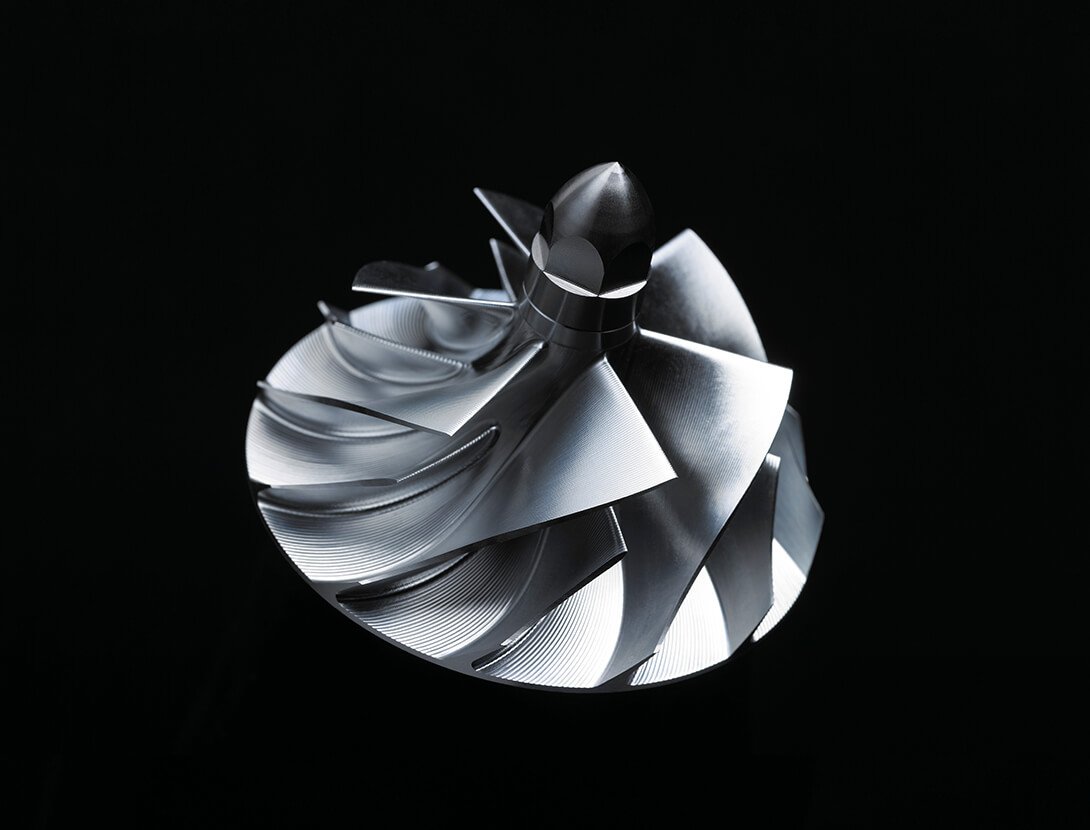 SUPERCHARGED ENGINE
Drawing on the know-how and technology possessed by the Kawasaki Heavy Industries (KHI) Group, Kawasaki’s supercharged engines deliver high engine output while maintaining a compact design. The key to achieving this incredible performance lies in the engines’ superchargers – vehicle-specific units designed completely in-house with technology from Kawasaki’s Gas Turbine & Machinery Company, Aerospace Company and Corporate Technology Division.
One of the greatest benefits of designing the superchargers in-house and tailoring their design to match the engines’ characteristics was that engineers were able to achieve high-efficiency operation over a wide range of conditions – something that would not have been possible by simply dropping in or trying to adapt an aftermarket automotive supercharger.
The importance of high efficiency in a supercharger is that, as the air is compressed, power-robbing heat gain is minimal. And while many superchargers are able to offer high-efficiency operation in a very limited range of conditions, Kawasaki’s superchargers offer high efficiency over a wide range of pressure ratios and flow rates – meaning over a wide range of engine speeds and vehicle speeds. This wide range of efficient operation (similar to having a wide power band) easily translates to strong acceleration. The superchargers’ high efficiency and minimal heat gain also meant that for motorcycle applications an intercooler was unnecessary, greatly saving weight and space, and enabling the engine’s compact design.
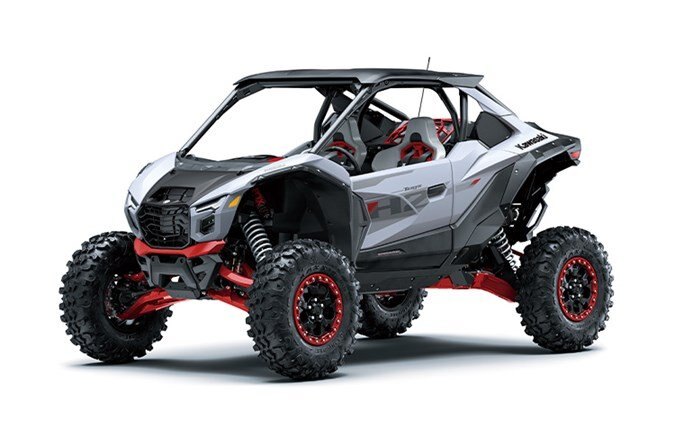
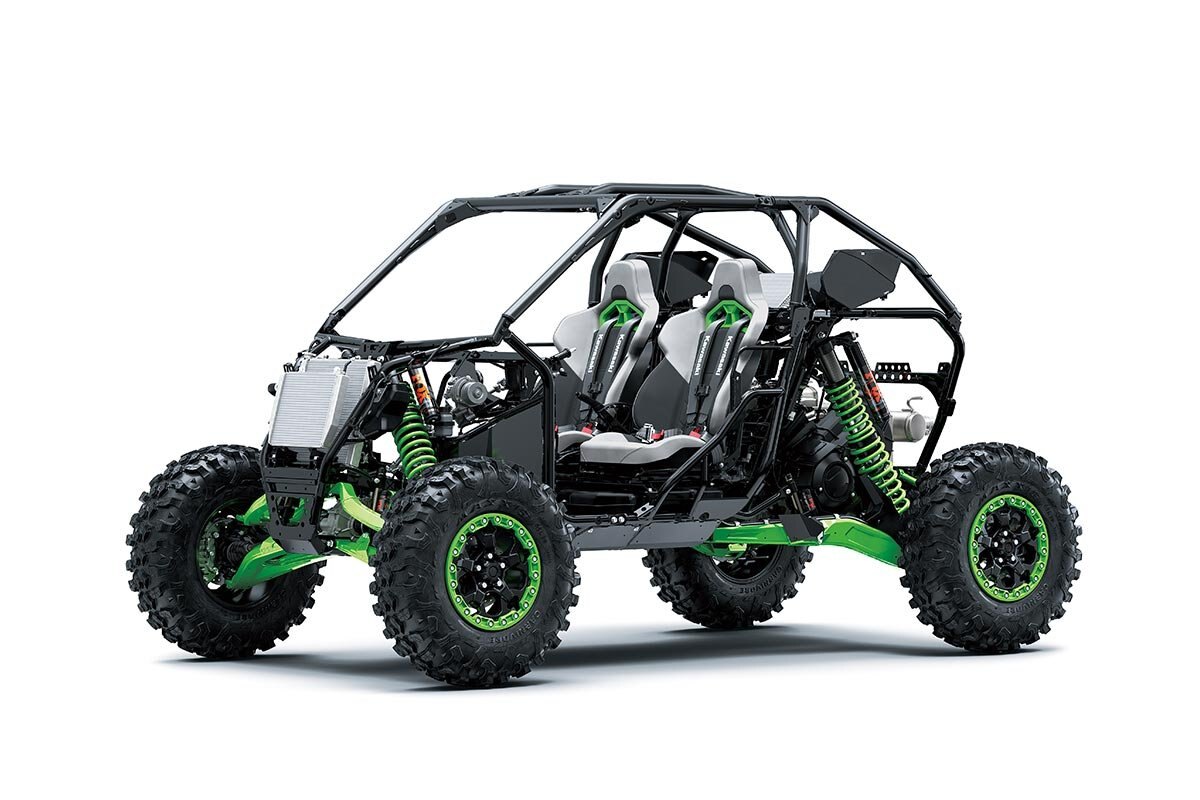
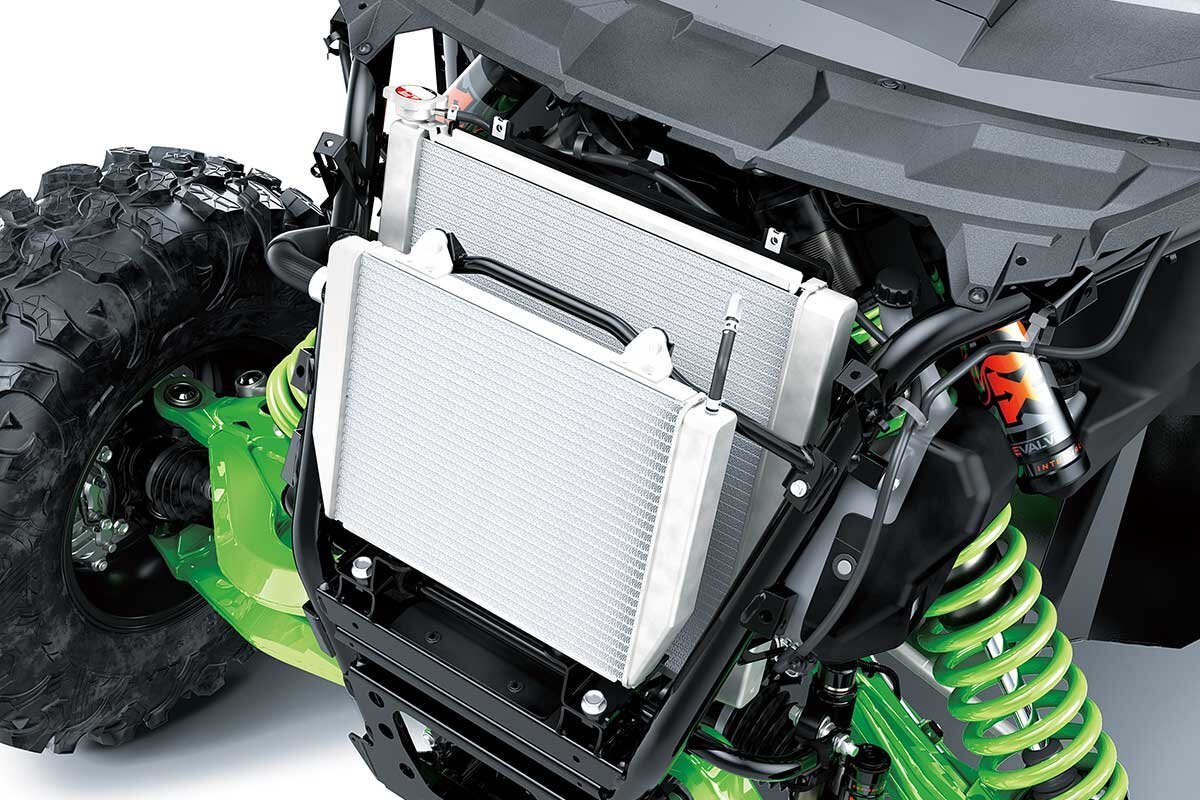
The supercharged engine used on Kawasaki’s high-performance side x sides takes advantage of the greater available space to incorporate an intercooler. Cooling the intake air allows a greater volume of air to be flowed, contributing to overall performance. |
KTRC (Kawasaki TRaction Control) (SxS)
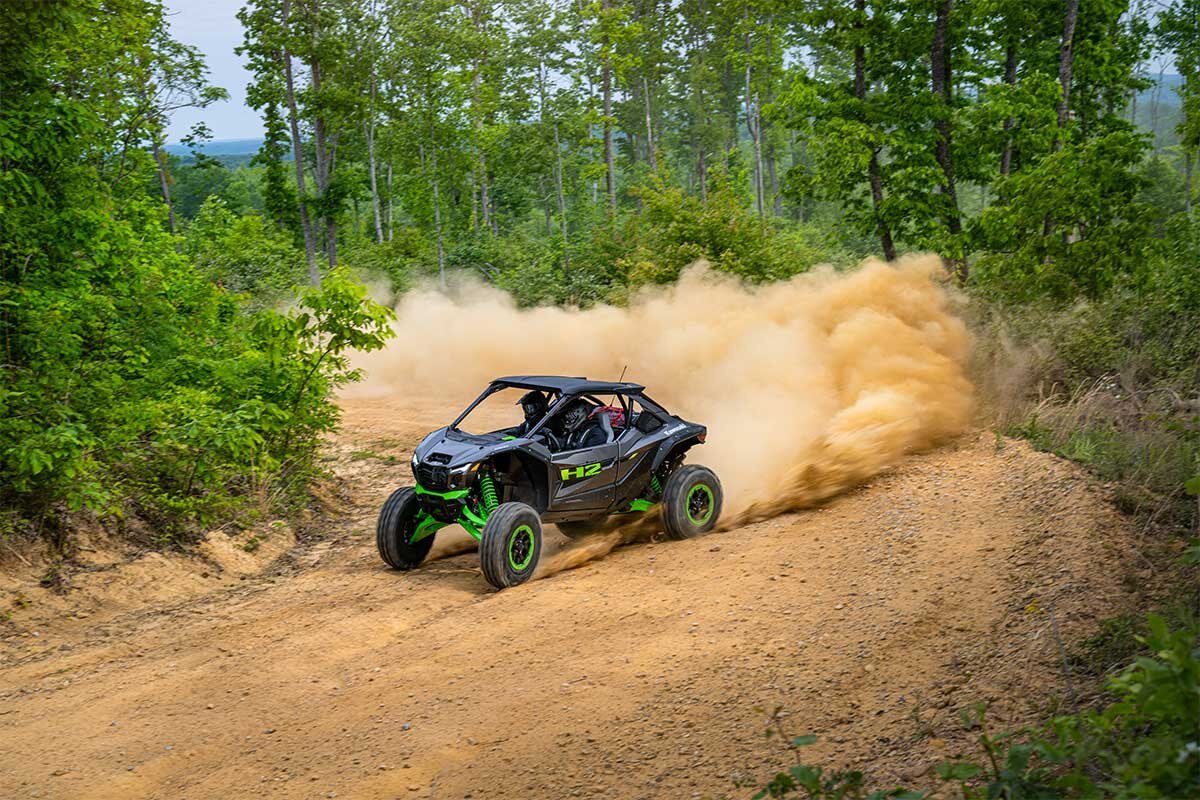
This version of KTRC was designed specifically for Kawasaki side x side models. The system manages rear-wheel traction by suppressing sudden spikes in engine speed to offer enhanced control when driving a model with elevated performance in 2WD. Kawasaki engineers programmed KTRC to emulate test drivers’ high-level control of the accelerator pedal, helping to stabilise vehicle attitude when accelerating from a standstill, or suppressing tail slide to trace their intended line around a corner. From wooded trails to wide-open deserts, this advanced driver support technology unlocks the experience of pure driving joy for a wide range of drivers. |
Chassis Management Technology
ERGO-FIT
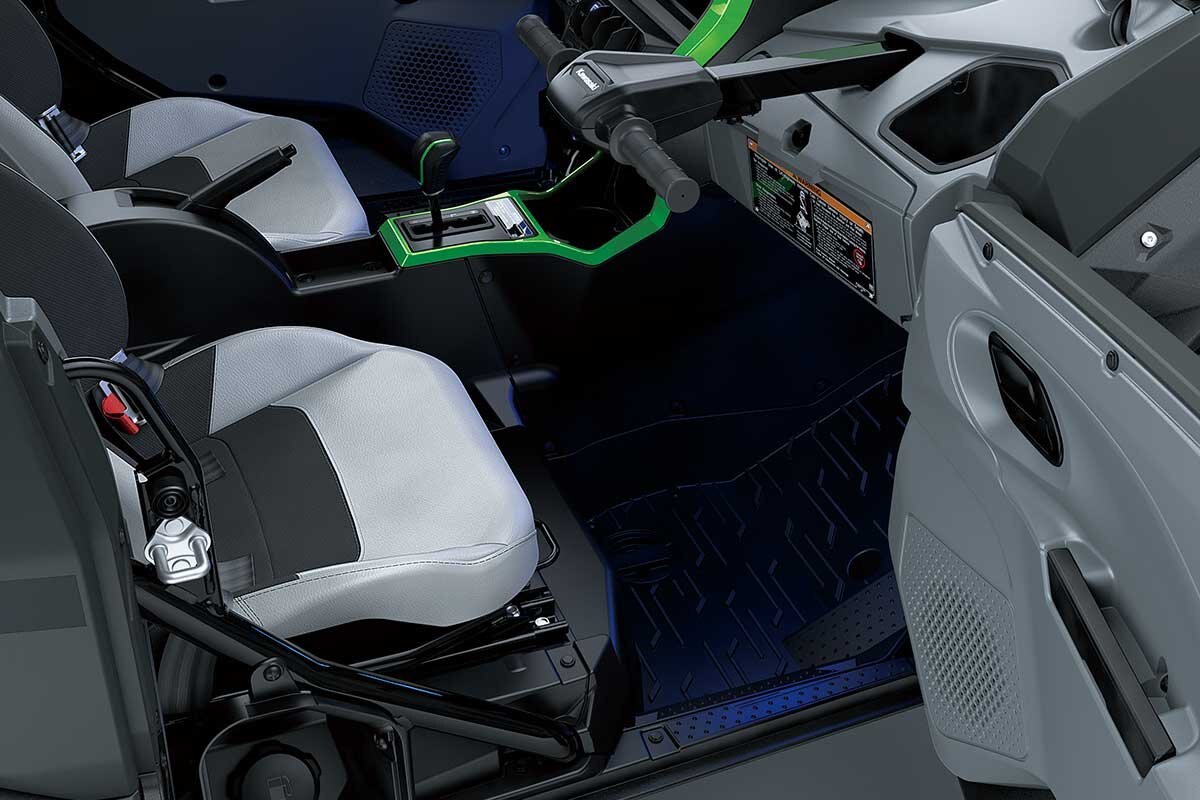
Proper fit is key for rider comfort and control. However, the ideal fit varies from rider to rider, depending on their physical dimensions and riding style.
ERGO-FIT is an interface system designed to allow riders to find their ideal riding position. Various points of the chassis interface (the handlebar, footpegs and seat, etc.) can be adjusted through a combination of interchangeable parts and parts with adjustable positions. This enables a wide range of riders to find a riding position that offers both comfort and control. Feeling at one with their machine, they will be able to experience how Kawasaki machines are fun and rewarding to ride.
*Adjustable parts and their range of adjustability vary by model. |
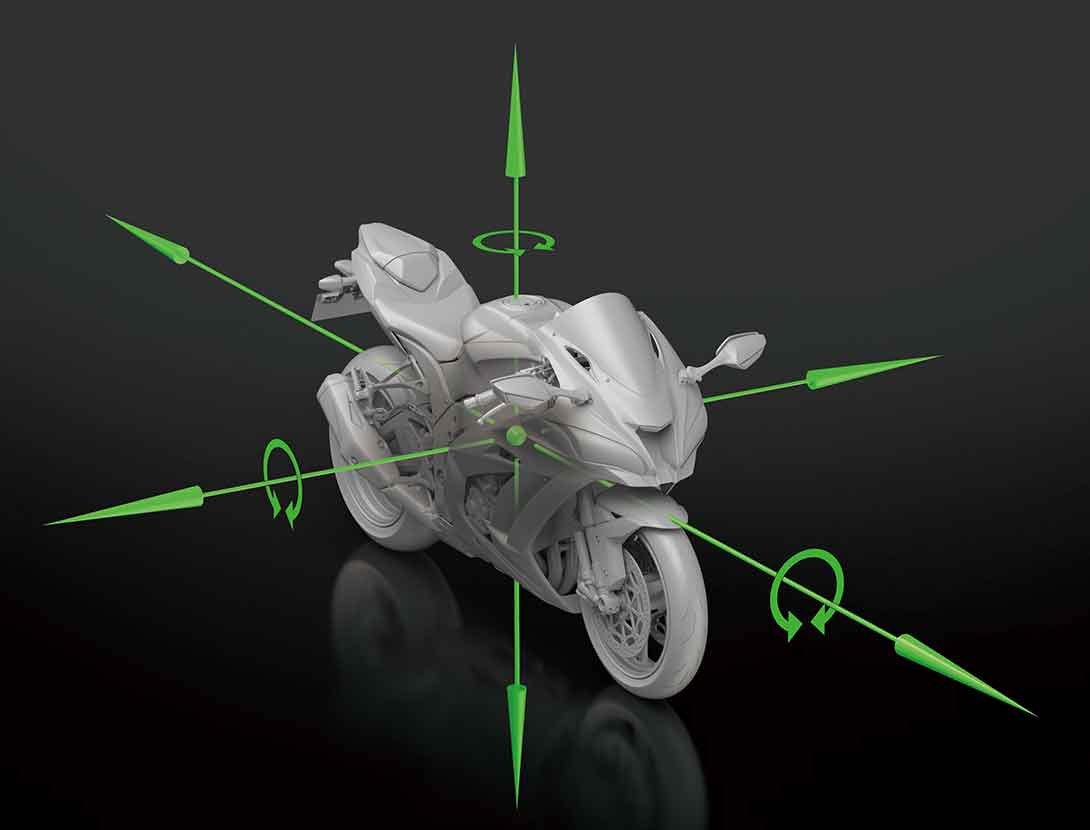 IMU-ENHANCED CHASSIS ORIENTATION AWARENESS
The strength of Kawasaki’s cutting-edge electronics has always been the highly sophisticated programming that, using minimal hardware, gives the ECU an accurate real-time picture of what the chassis is doing. Kawasaki’s proprietary dynamic modelling program examines changes in multiple parameters, enabling it to take into account changing road and tire conditions.
The addition of an IMU (Inertial Measurement Unit) enables inertia along 6 DOF (degrees of freedom) to be monitored: acceleration along longitudinal, transverse and vertical axes, plus roll rate, pitch rate and yaw rate. This additional feedback contributes to an even clearer real-time picture of chassis orientation, enabling even more precise management for control at the limit. |
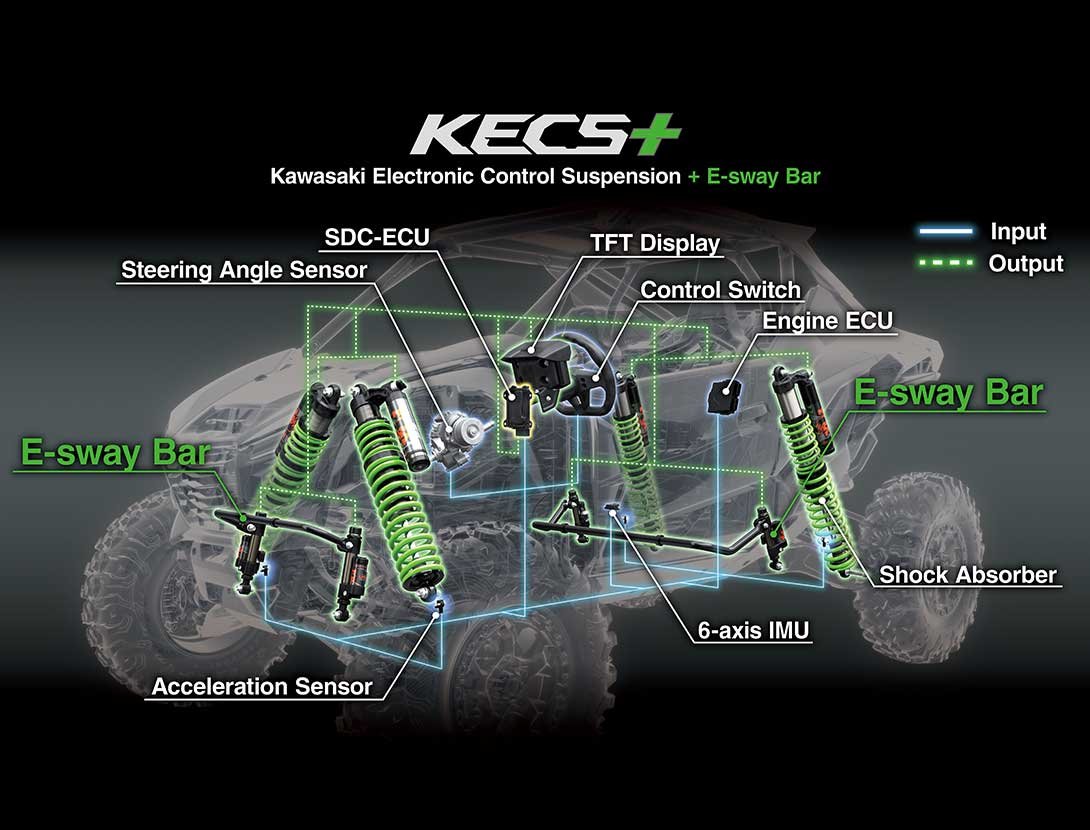 KECS+ (Kawasaki Electronic Control Suspension + E-Sway Bar)
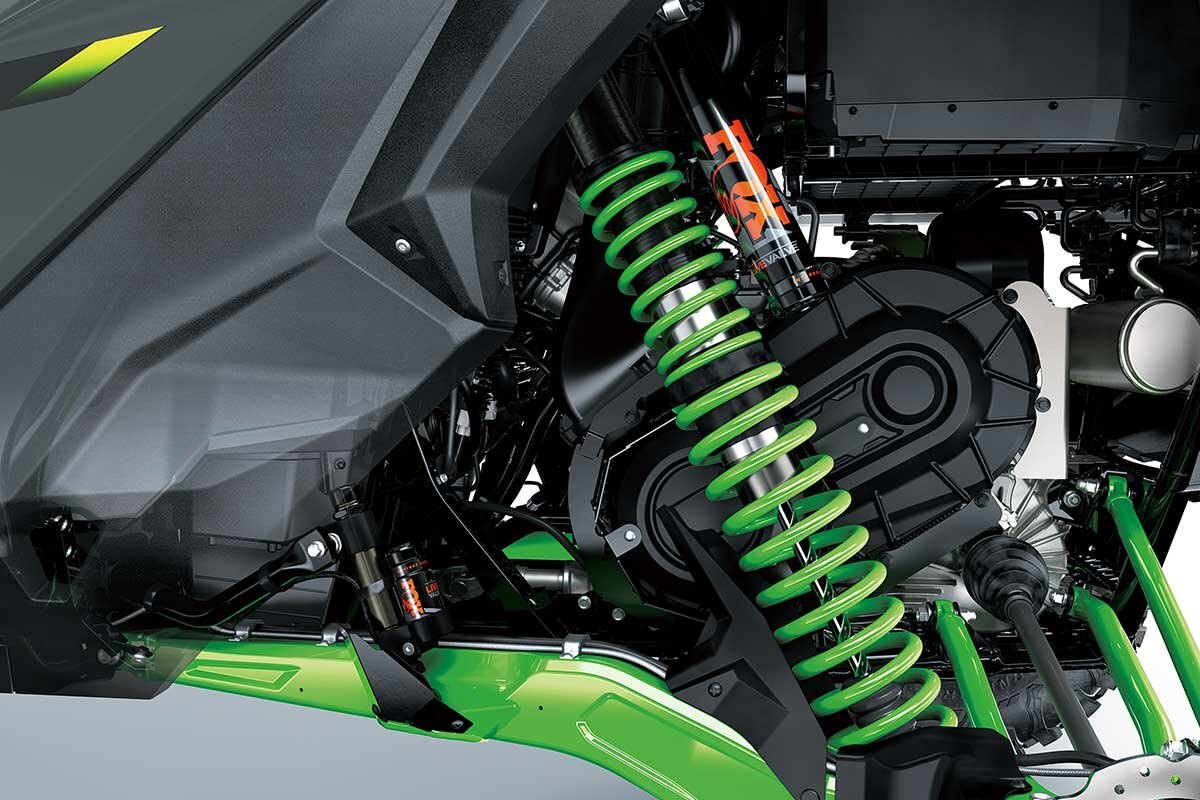
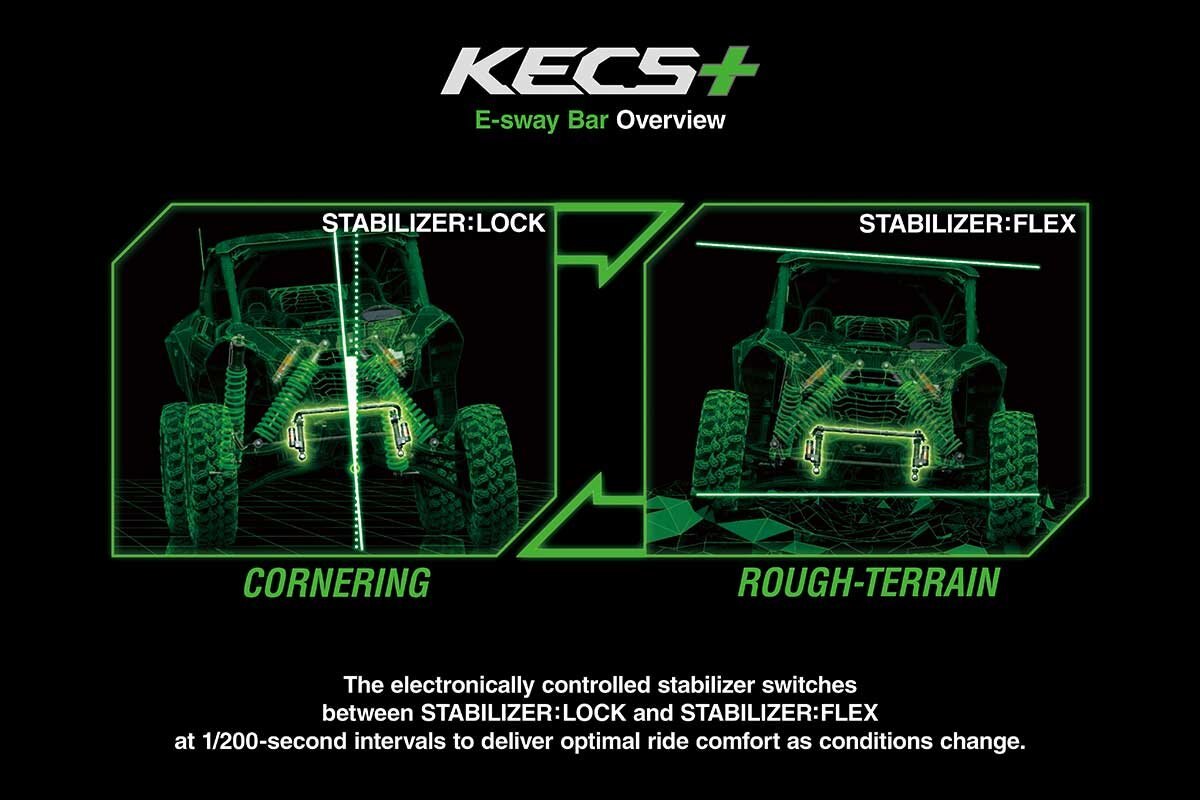
KECS+ combines electronically controlled suspension with an electronically controlled sway bar to effectively achieve high-level suspension control matching road conditions in real time. Like KECS, KECS+ integrates high-performance FOX “Internal Bypass” and “Live Valve” suspension technology with a Bosch electronic control system and Kawasaki original suspension settings to deliver greater comfort and enhanced performance across a wide range of riding situations. Acceleration sensors mounted below each of the shocks sense changes in the terrain even more quickly than the IMU in the cabin, making a significant contribution to the suspension’s ground-hugging performance.
Where KECS+ differs from KECS is the addition of an electronically controlled sway bar. FOX Live Valve Sway Bar Disconnect further contributes to suspension performance by electronically switching between Lock and Flex operating conditions to offer either roll suppression or fully independent suspension articulation as needed. The system’s integrated ECU simultaneously coordinates both shock unit damping and sway bar effectiveness. With selectable modes supporting everything from high-speed sport driving to tackling technical terrain, KECS+ achieves high-level suspension control matching road conditions in real time. |